
Microgreens Market in India: Market Size, Business Potential and How Much Can You Earn?

Discover the growing opportunities in India's microgreens industry and how MikroGrenz Microgreen is helping aspiring growers explore this emerging business.
India's food industry is evolving. Consumers are becoming increasingly interested in healthy eating, fresh ingredients, and growing their own food. Among the emerging opportunities in this space, microgreens are attracting attention from restaurants, health-conscious households, urban gardeners, and aspiring agricultural entrepreneurs.
But microgreens are more than just a healthy addition to a meal. They also present potential business opportunities in fresh produce, seeds, growing kits, commercial farming systems, and agricultural education.
For entrepreneurs considering this industry, three important questions arise:
What is the current market size of microgreens in India?
How much can a microgreens farming business earn?
How can beginners enter the market without investing in a large farm?
In this article, we explore the Indian microgreens market, its growth potential, possible earnings, and how MikroGrenz Microgreen is helping make microgreens cultivation more accessible.
1. What Are Microgreens, and Why Are They Gaining Attention?
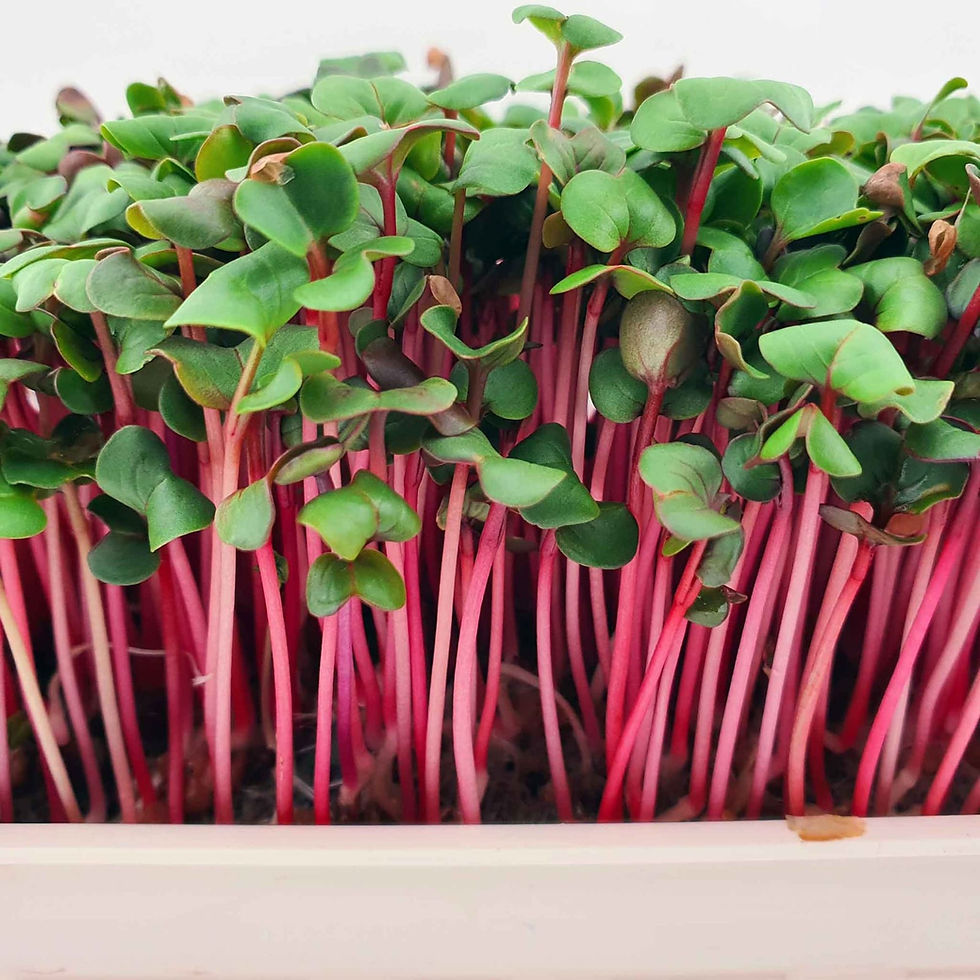
Microgreens are young edible plants harvested at an early growth stage, generally after their cotyledons have developed and the first true leaves begin to appear.
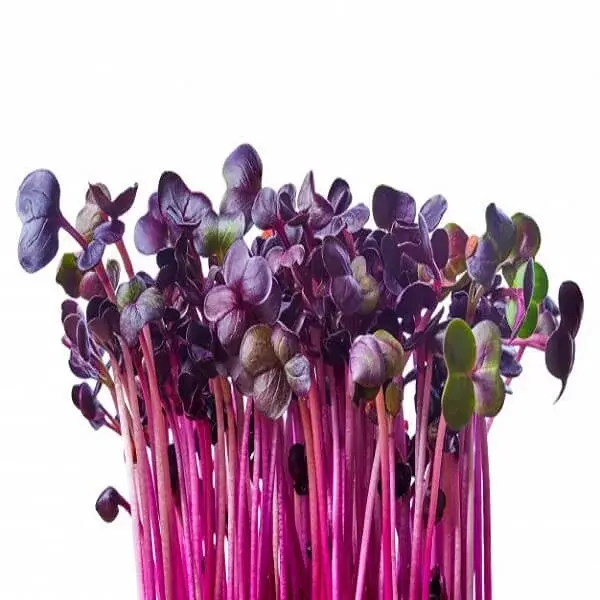
Popular varieties include radish, broccoli, sunflower, pea shoots, mustard, beetroot, and red cabbage.
Depending on the variety and growing conditions, many microgreens can be harvested within approximately 7–14 days. They can be cultivated in trays and, where suitable conditions are maintained, grown in relatively small indoor spaces.
Microgreens offer several advantages:
They require relatively little growing space.
Many varieties have short cultivation cycles.
They can be grown on shelves using vertical space.
They offer different flavours, textures, and colours.
They can serve both household consumers and commercial food businesses.
Their nutritional composition varies by variety, so microgreens should be considered part of a balanced diet rather than a replacement for other vegetables.
As awareness of fresh food and home gardening develops, microgreens may create opportunities for both small-scale growers and established agricultural businesses.
2. What Is the Size of the Indian Microgreens Market?
The Indian microgreens industry is still developing, but published market research suggests that it could expand over the coming years.
According to IMARC Group, the Indian microgreens market was valued at approximately US$78.7 million in 2025. The company projects that it could reach US$158.6 million by 2034, with a compound annual growth rate of approximately 7.69% over the forecast period.
Grand View Research provides a higher estimate, valuing India's microgreens market at approximately US$146 million in 2025 and projecting growth to US$397.6 million by 2033.
These figures come from separate research methodologies and should not be combined into a single estimate.
Market indicator | IMARC Group | Grand View Research |
Estimated market size in 2025 | US$78.7 million | US$146 million |
Projected market size | US$158.6 million by 2034 | US$397.6 million by 2033 |
Reported CAGR | 7.69% | 13.55% |
Sources: IMARC Group and Grand View Research.
These figures are third-party market estimates, not official government statistics. Differences may arise from how each research company defines the market and develops its forecasts.
Nevertheless, the reports suggest that microgreens could become a more commercially significant category within India's fresh-food and controlled-environment agriculture sectors.
What Does This Mean for Aspiring Entrepreneurs?
A growing national market can create opportunities for businesses supplying:
Fresh microgreens to restaurants and households.
Seeds and growing materials to home gardeners.
Growing kits for beginners.
Commercial production systems for aspiring farmers.
Training and educational resources for new growers.
This is where companies such as MikroGrenz Microgreen can participate in the industry's development.
Rather than focusing exclusively on selling harvested greens, MikroGrenz offers products and resources that help people explore microgreens cultivation at home and at a commercial scale.
Explore the product range at MikroGrenz Microgreen.
3. Why Could the Microgreens Market Grow in India?
Several factors could support the industry's development.
Increasing Interest in Healthy Eating
Consumers are paying greater attention to fresh ingredients and the nutritional composition of their food.
Microgreens offer a range of flavours and colours and can be incorporated into salads, sandwiches, wraps, and other dishes.
As consumers become more familiar with their culinary uses, microgreens may find opportunities in both household kitchens and food-service businesses.
Demand from Restaurants and Hotels
Restaurants, cafés, hotels, and premium food establishments are potential customers for microgreens.
Chefs can use them to improve the appearance, texture, and flavour of dishes.
However, commercial success depends on factors such as reliable supply, consistent quality, appropriate pricing, and delivery schedules.
Urban Farming and Limited Space
Traditional farming often requires access to agricultural land. Microgreens, by contrast, can be cultivated in suitable indoor spaces, balconies, spare rooms, and small production facilities.
Vertical racks can help growers use available space more efficiently.
This creates an opportunity for individuals who want to explore agriculture without immediately investing in a large farm.
Home Gardening and DIY Growing
Some consumers prefer to grow their own food instead of purchasing every ingredient.
Growing kits can simplify the process by bringing together trays, seeds, growing media, and practical instructions.
MikroGrenz serves this opportunity through its range of home-growing kits and microgreens supplies.
Its product range is intended to help beginners understand the growing process and explore microgreens cultivation in a manageable space.
4. MikroGrenz Microgreen: Making Microgreens Cultivation More Accessible
MikroGrenz Microgreen is a microgreens-focused brand based in Wayanad, Kerala. The business focuses on microgreens products, growing resources, and solutions for people interested in cultivating microgreens at home or exploring commercial production.
Its approach addresses an important challenge in the industry: many people may be interested in microgreens but do not know which seeds to choose, what equipment they need, or how to begin growing.
MikroGrenz aims to make that process more accessible by offering products and educational resources for different levels of experience.
Seeds for Different Growing Needs
Choosing suitable seeds is an important part of microgreens cultivation.
MikroGrenz offers a range of microgreens seeds, including varieties such as radish, sunflower, broccoli, mustard, peas, and beetroot, subject to availability.
Different varieties offer different flavours, growing characteristics, and culinary applications.
For home growers, this range provides opportunities to experiment with different crops. For aspiring commercial growers, selecting suitable varieties is an important step in understanding production costs and customer preferences.
Explore the MikroGrenz microgreens seed collection.
Home-Growing Kits for Beginners
Starting microgreens cultivation can seem complicated when beginners need to source seeds, trays, growing media, and other accessories separately.
MikroGrenz offers growing kits designed to bring together essential cultivation supplies.
Examples include:
MikroGrenz SmartGrow Kit: A compact option for people interested in exploring microgreens cultivation.
Microgreen Business Starter Kit: Compact Setup: A growing kit intended for beginners and aspiring entrepreneurs.
Microgreen Starter Kit Premium: A more comprehensive setup designed for home cultivation and people interested in exploring small-scale production.
Product contents and prices may change, so customers should check the website for current details.
These products allow people to begin learning the cultivation process before deciding whether to expand into a larger operation.
View the MikroGrenz growing kits.
Commercial Microgreens Growing Systems
For entrepreneurs who want to explore commercial cultivation, MikroGrenz also offers a commercial growing system.
The system listed on its website includes growing trays, a rack, grow lights, ventilation equipment, growing media, seeds, monitoring tools, and growing guidance.
The listed system is designed to support vertical production in a relatively compact space.
A growing system can help establish production capacity, but purchasing equipment does not automatically create a profitable business.
Entrepreneurs must still identify customers, calculate production costs, manage crop losses, and establish a reliable sales process.
Before investing, prospective growers should evaluate the equipment specifications, available space, expected yield, operating costs, and local market demand.
Explore the MikroGrenz Commercial Microgreen Unit.
Educational Resources for Aspiring Growers
Cultivation knowledge is just as important as equipment.
Growers need to understand seed density, watering, airflow, harvesting, hygiene, storage, and production planning.
MikroGrenz also offers microgreens growing guides and educational resources intended to help people understand the cultivation process and explore the commercial side of the industry.
By combining growing supplies with practical learning resources, the brand aims to support people who are interested in starting small and developing their knowledge over time.
Visit MikroGrenz Microgreen to explore its available products and resources.
5. How Much Can You Earn from a Microgreens Business in India?
One of the biggest questions for aspiring growers is whether microgreens farming can generate meaningful income.
The answer depends on the quantity sold, selling price, production yield, customer demand, and operating costs.
The following scenarios demonstrate how revenue and expenses might work.
Important: These are hypothetical financial examples, not verified industry averages or guaranteed earnings. They assume that all the stated quantities are sold at the stated prices. Actual results may differ considerably.
Scenario 1: Small-Scale Growing Business
Suppose a grower produces and sells 10 kg of microgreens per month.
Financial indicator | Monthly amount |
Quantity sold | 10 kg |
Average selling price | ₹1,000/kg |
Monthly revenue | ₹10,000 |
Seeds and growing materials | ₹2,000 |
Packaging | ₹800 |
Electricity and water | ₹500 |
Delivery and other expenses | ₹1,200 |
Operating surplus | ₹5,500 |
Annual revenue would be ₹1,20,000, while the illustrative annual operating surplus would be ₹66,000.
These calculations exclude equipment depreciation, rent, the owner's labour, taxes, and any other unlisted expenses.
This type of operation could be useful for learning cultivation and testing customer demand before expanding.
Scenario 2: A Growing Local Business
Suppose a grower sells 30 kg of microgreens per month.
Financial indicator | Monthly amount |
Quantity sold | 30 kg |
Average selling price | ₹1,000/kg |
Monthly revenue | ₹30,000 |
Seeds and growing materials | ₹5,000 |
Packaging | ₹2,000 |
Electricity and water | ₹1,000 |
Delivery and other expenses | ₹3,000 |
Operating surplus | ₹19,000 |
Annual revenue would be ₹3,60,000, with an illustrative annual operating surplus of ₹2,28,000.
However, paid labour, rent, equipment depreciation, financing costs, and other expenses could reduce the final profit.
Scenario 3: A Larger Commercial Operation
Consider a business that sells 100 kg of microgreens per month.
Financial indicator | Monthly amount |
Quantity sold | 100 kg |
Average selling price | ₹1,000/kg |
Monthly revenue | ₹1,00,000 |
Seeds and growing materials | ₹15,000 |
Packaging | ₹7,000 |
Electricity and water | ₹3,000 |
Delivery and other expenses | ₹10,000 |
Operating surplus | ₹65,000 |
Annual revenue would be ₹12,00,000, and the illustrative annual operating surplus would be ₹7,80,000.
This is a simplified example. A commercial business may incur significant additional costs, including labour, rent, equipment depreciation, and unsold produce.
Comparing the Scenarios
Business scale | Monthly sales | Monthly revenue | Illustrative operating surplus |
Small-scale | 10 kg | ₹10,000 | ₹5,500 |
Growing operation | 30 kg | ₹30,000 | ₹19,000 |
Larger commercial operation | 100 kg | ₹1,00,000 | ₹65,000 |
These examples show why revenue should never be confused with profit.
A business that produces more microgreens does not necessarily earn more. Profitability depends on its ability to sell the harvest at suitable prices while controlling production and distribution costs.
How Can MikroGrenz Help Someone Explore This Opportunity?
For someone interested in entering the industry, the first step does not have to be constructing a large farm.
A beginner could start by learning the growing process, experimenting with a small number of varieties, and understanding the costs involved.
MikroGrenz offers home-growing kits, seeds, growing supplies, and commercial systems that can help people explore different stages of cultivation.
For aspiring entrepreneurs, these products can provide a starting point for learning how microgreens are produced.
However, prospective growers should validate demand with local restaurants, cafés, retailers, and households before committing to a larger investment.
The goal should be to establish a viable business model, not simply to maximise production.
6. Business Opportunities Beyond Selling Fresh Microgreens
The microgreens industry offers more than one way to generate revenue.
Fresh Microgreens Supply
Growers can supply fresh microgreens to restaurants, hotels, cafés, and households.
This model depends on repeat orders, consistent quality, and efficient delivery.
Seeds and Growing Supplies
Businesses can sell seeds, trays, growing media, and accessories to home gardeners and commercial growers.
MikroGrenz participates in this segment through its range of microgreens seeds and cultivation supplies.
Home-Growing Kits
DIY growing kits provide an accessible way for beginners to learn how to cultivate microgreens at home.
They may appeal to households, hobby gardeners, and people interested in growing fresh greens in limited spaces.
Commercial Growing Systems
Entrepreneurs who want to produce larger quantities may require racks, trays, lighting, ventilation, growing media, and monitoring equipment.
MikroGrenz's commercial growing system is an example of a product designed for people exploring this route.
Educational Resources
Growing guides and practical training can help beginners understand cultivation techniques and common production challenges.
Educational resources may also support people who want to assess whether commercial microgreens production is suitable for them.
These different business models demonstrate that opportunities exist across the microgreens supply chain, from growing and selling fresh produce to providing the equipment and knowledge required for cultivation.
7. Is Microgreens Farming a Good Opportunity in Kerala?
Kerala offers an interesting environment in which to investigate microgreens farming.
Potential customer segments include restaurants, cafés, hotels, specialty food retailers, and households interested in fresh ingredients.
However, the presence of these customer groups does not guarantee sufficient demand. Entrepreneurs must establish which customers purchase microgreens regularly and what prices they are willing to pay.
Kerala's warm temperatures and humidity also require careful attention to growing conditions, airflow, hygiene, storage, and product handling.
For a fresh-produce business, distribution is particularly important because harvested microgreens are perishable.
Local growers may benefit from developing a concentrated customer base before attempting to supply distant markets.
Why MikroGrenz Is Relevant to Kerala's Microgreens Industry
MikroGrenz is based in Wayanad, Kerala, and focuses on products and resources for people interested in microgreens cultivation.
Its presence in Kerala connects the brand to a regional market in which entrepreneurs and home growers can investigate the possibilities of growing microgreens.
For people considering this business, MikroGrenz provides a starting point for exploring seeds, growing kits, commercial growing equipment, and educational resources.
The wider opportunity is to develop local cultivation knowledge and connect production with actual customer demand.
8. Challenges That Every Microgreens Entrepreneur Should Understand
Despite the potential opportunities, microgreens farming comes with important challenges.
Short shelf life: Fresh microgreens can deteriorate quickly if they are not harvested, handled, packaged, and stored appropriately.
Customer awareness: Some consumers may not know how to use microgreens in everyday meals.
Market access: Producing a high-quality crop is not enough if the grower cannot find customers willing to purchase it consistently.
Production costs: Seeds, growing media, electricity, packaging, labour, and equipment all influence profitability.
Crop losses: Poor growing conditions, contamination, inconsistent germination, and unsold produce can reduce returns.
Food safety: Hygiene, appropriate handling, and compliance with applicable food-safety requirements are essential.
These challenges make planning and customer research particularly important.
A prospective grower should calculate the expected cost per kilogram and identify potential buyers before increasing production.
9. The Future of Microgreens in India: From a Niche Product to a Business Opportunity
Microgreens have the potential to become a more familiar part of India's fresh-food landscape.
Future growth could be supported by increasing awareness of fresh ingredients, culinary demand, home gardening, urban farming, and interest in controlled-environment production.
The industry's development may also create opportunities for businesses supplying seeds, growing equipment, educational resources, and commercial cultivation systems.
For brands such as MikroGrenz Microgreen, this creates an opportunity to help more people understand microgreens and explore cultivation at different scales.
However, sustainable industry growth will depend on more than consumer interest. It will require consistent product quality, practical growing knowledge, reliable distribution, appropriate pricing, and repeat customers.
The businesses most likely to succeed will be those that understand both the agricultural process and the commercial realities of selling a perishable product.
Conclusion: Explore the Microgreens Opportunity with MikroGrenz
India's microgreens industry presents an emerging opportunity for people interested in fresh food, home gardening, and small-scale agriculture.
Published market research points towards further growth, while different business models create opportunities for growers, product suppliers, and educational providers.
Nevertheless, national market projections should not be interpreted as guarantees of individual earnings.
A profitable microgreens business requires suitable growing conditions, realistic production planning, careful cost management, and reliable customers.
For beginners, the journey can start with learning how to grow microgreens on a small scale. Those who want to explore the commercial side can then investigate production systems, operating expenses, and local demand.
MikroGrenz Microgreen aims to make this journey more accessible through microgreens seeds, home-growing kits, cultivation supplies, commercial growing systems, and educational resources.
Whether you are interested in growing microgreens for your family or investigating the potential of a commercial venture, developing the right knowledge is an important first step.
Start Your Microgreens Journey with MikroGrenz
Explore the available products and resources:
Seeds and growing supplies: Discover different microgreens varieties and cultivation essentials.
Home-growing kits: Explore options for beginners and households.
Commercial growing systems: Learn about equipment for larger-scale production.
Growing guides: Build your understanding of cultivation and business planning.
Visit the official website to explore the available options.
MikroGrenz Microgreen — Grow Fresh, Learn More, and Explore the Potential of Microgreens.
Website: www.mikrogrenz.com
Frequently Asked Questions
1. What is the market size of microgreens in India?
Published estimates differ by research provider. IMARC Group estimated the market at US$78.7 million in 2025, while Grand View Research estimated US$146 million. These are third-party estimates based on different methodologies.
2. How much can a microgreens business earn in India?
Earnings depend on sales volume, selling price, crop yield, and operating expenses. A business's revenue should not be confused with its net profit. Entrepreneurs should prepare a financial model using actual local costs and realistic sales estimates.
3. Can I start growing microgreens at home?
Yes. Many varieties can be grown in suitable trays in a home environment. Beginners should learn about seed selection, watering, airflow, hygiene, and harvesting before expanding production.
4. Does MikroGrenz offer microgreens growing kits?
Yes. MikroGrenz lists several growing kits, including the SmartGrow Kit, Compact Business Starter Kit, and Premium Starter Kit. Product specifications and prices may change, so check the official website for current details.
5. Does MikroGrenz offer commercial growing systems?
Yes. MikroGrenz lists a commercial microgreens growing unit with trays, racks, lighting, ventilation equipment, growing materials, and guidance. Prospective buyers should review the current specifications and assess local demand before investing.
6. Is microgreens farming profitable in Kerala?
It can be a business opportunity, but profitability depends on local customer demand, selling prices, production costs, crop losses, and distribution. Entrepreneurs should validate demand before investing in commercial production.
7. Where can I buy microgreens seeds and growing kits?
You can explore the available seeds, kits, growing supplies, and commercial systems through the official MikroGrenz website at www.mikrogrenz.com.
Research sources
IMARC Group — India Microgreens Market.
Grand View Research — India Microgreens Market Size & Outlook.
MikroGrenz Microgreen — Official website, product catalogue, and company story.
Disclaimer: Market figures are third-party estimates. Earnings examples are hypothetical calculations and are not guaranteed returns. Actual results depend on location, growing conditions, selling prices, customer demand, production costs, and other business expenses. Product availability, specifications, and prices are subject to change.








Comments